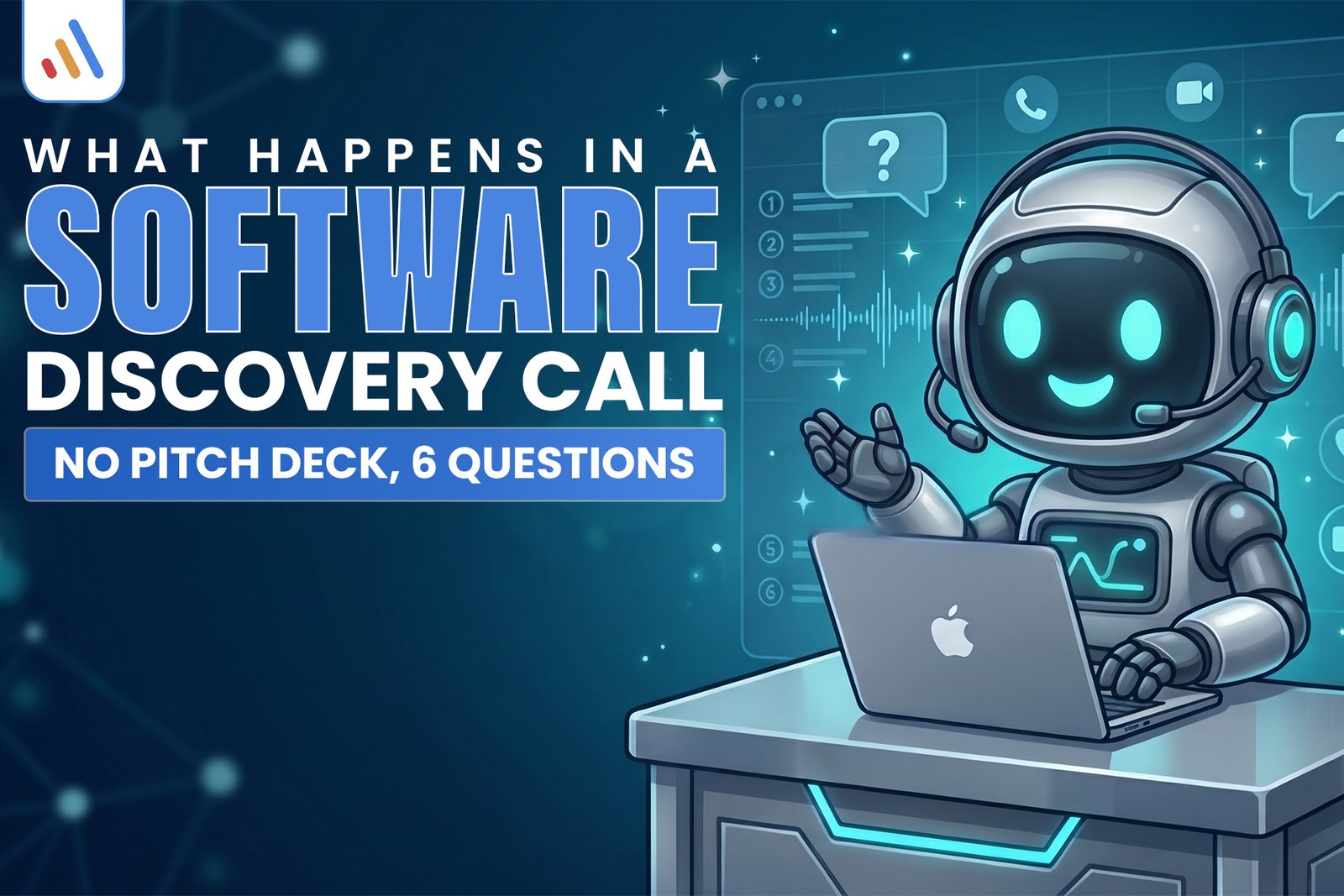
A software discovery call is a focused first conversation where a development team learns about your business problem, users, current systems and constraints, then helps you decide whether to build, buy, integrate or wait before defining a practical next step.
The goal is not to sit through a sales presentation or receive a rushed development quotation. It is to discuss the problem, understand your requirements and determine what makes sense for your business.
At VCL International, we start by understanding business goals and existing requirements before recommending a technical solution. Sometimes custom development is appropriate. In other situations, an existing platform, integration or smaller improvement is the better option.
What Happens in the First 30 Minutes?
A useful software project discovery meeting focuses on your business goals, current workflow, users, existing systems, technical constraints and expected outcomes.
Here is an example of how a 30-minute conversation can be structured:
| Time | What Happens | What You Do |
| 0–5 minutes | Introductions and business overview | Explain your business and project idea |
| 5–25 minutes | Six core discovery questions | Describe the problem, users, workflow and requirements |
| 25–30 minutes | Initial observations and next steps | Discuss priorities and outstanding information |
We do not need to turn the meeting into a presentation. The focus stays on your business rather than a pitch deck.
When a workflow is difficult to explain, a simple whiteboard sketch or shared-screen diagram can help everyone understand how information moves between employees, customers and existing systems.
You do not need a complete technical specification before the conversation. A clear explanation of the problem is enough to get started.
6 Discovery Call Questions for Software Projects (With Examples)
These are six important discovery call questions for software projects. They help a development team understand what you need, why you need it and what a practical solution should accomplish.
1. What Business Problem Are You Trying to Solve?
We start by identifying the business problem rather than immediately discussing features.
For example, saying “We need a mobile app” describes a possible solution. Saying “Our sales representatives cannot check live inventory while visiting customers” explains the actual problem.
We want to understand:
- What is currently difficult or inefficient?
- Where do delays or errors occur?
- What happens if the problem remains unresolved?
- Why does the business want to address it now?
This distinction matters because a mobile application might solve the problem, but an integration with your existing inventory platform could achieve the same result with less development.
2. Who Will Use the Software?
Next, we identify everyone who will interact with the system.
Users could include customers, employees, administrators, managers, suppliers and external partners. Each group may require different permissions, screens and workflows.
Consider an online ordering platform. Customers need to browse products and place orders. Employees need to manage orders, while managers need access to reporting and business performance.
VCL International Needu Feedu project provides a real example of why user roles matter. The platform included separate workflows for customers, restaurants and delivery riders, alongside administrative functionality.
The project illustrates how identifying user groups early helps define the actual application requirements.
3. How Do You Handle This Process Today?
We examine your existing workflow to understand what the software needs to improve.
Tell us whether your team currently relies on spreadsheets, emails, paper records, manual approvals or several disconnected applications.
For example, an order process might look like this:
- A customer sends an order by email.
- An employee enters it into a spreadsheet.
- A manager approves it.
- The warehouse checks stock separately.
- The finance department creates an invoice.
Mapping the process helps identify repeated work, delays and unnecessary manual steps.
It also prevents a common mistake: automating an inefficient workflow without first understanding why the process works that way.
4. Which Existing Systems Must the Software Connect With?
The fourth question identifies integrations and technical dependencies that can affect project scope, cost and complexity.
Your new application might need to exchange information with:
- CRM software
- Existing ERP systems
- Accounting platforms
- Ecommerce stores
- Payment gateways
- Inventory management applications
Prepare a list of the platforms your business currently uses.
We also need to understand whether these platforms provide APIs, technical documentation or integration support.
Not every system supports every connection. Before confirming feasibility, a development team needs to investigate API availability, data formats, permissions and third-party limitations.
5. What Are Your Budget, Timeline and Technical Constraints?
We discuss practical boundaries before recommending a solution.
Be prepared to explain:
- Your approximate investment range
- Important business deadlines
- Existing hosting or technology restrictions
- Data privacy and security requirements
- Required devices and platforms
- Relevant contractual or regulatory considerations
You do not need an exact development budget before the first meeting.
However, sharing an approximate range helps us understand which solutions are realistic. A simple internal application and a multi-module enterprise platform require very different levels of planning and development.
For a better understanding of the financial considerations, read our guide to custom software vs. off-the-shelf solutions.
6. What Would Make This Project Successful?
The final question establishes what the business expects to achieve.
Would success mean:
- Fewer manual data entries?
- Faster order approvals?
- Better inventory visibility?
- Easier customer ordering?
- More reliable reporting?
- Reduced administrative work?
Focus on measurable outcomes rather than simply counting features.
This conversation also helps define your Minimum Viable Product (MVP): the smallest useful version of the software that addresses the main problem.
For example, VCL Needu Feedu project started with a core website and Android application before expanding to the iOS version and additional functionality. This shows why prioritising essential requirements helps organise development into manageable stages.
See the Needu Feedu project case study for a real example.
When We Might Recommend Not Building Custom Software
A discovery call should help you make the right business decision, even when custom development is not the answer.
We may recommend an alternative in situations such as these:
An existing product already solves the problem.
Imagine a retailer who wants basic stock counts, reorder alerts and purchase-order management. An established inventory platform might already provide those functions and integrate with the retailer’s accounting software.
Building an entirely new application would add unnecessary development and maintenance costs if an existing product meets the requirements.
An integration would solve the problem.
Sometimes two systems already have the necessary functionality but cannot share information effectively. Connecting them may be more practical than replacing either application.
The requirements are not clear enough.
When priorities, users or business processes are still changing, it can be better to clarify the requirements before committing to development.
These are illustrative situations, not claims about a particular VCL client.
A credible software development partner should explain these alternatives, identify limitations and discuss what the business actually needs.
Ready to Discuss Your Software Requirements?
Discuss your current workflow, business problem and project idea with VCL International. Our team can help you explore possible solutions and identify the information needed for the next stage.
How to Prepare for a Software Project Discovery Meeting
You only need a few basic details to make your software development consultation productive.
Prepare the following before the meeting:
- Business overview: A short explanation of your company and what it does.
- Problem description: What do you want the software to improve?
- Current workflow: How does your team handle the process today?
- Existing systems: Which applications, platforms and tools do you already use?
- Essential features: List what the software must do and what can wait.
- Budget and timing: Share an approximate investment range and any important deadlines.
You can also bring screenshots, sample spreadsheets, workflow diagrams or links to existing applications.
Avoid sharing passwords, sensitive customer records or confidential documents before agreeing on appropriate access and confidentiality arrangements.
Most importantly, bring a list of your custom software project requirements, even if it is only a rough outline. We can help organise and clarify those requirements during the discussion.
What Happens After a Software Discovery Call?
After the conversation, both sides should understand the business problem, initial requirements and information still needed before preparing a reliable proposal.
Depending on the project, the next steps may include:
- Requirements summary: Documenting the business problem, users and important features.
- Technical assessment: Identifying integration requirements, dependencies and possible limitations.
- Solution recommendation: Deciding whether to build, buy, integrate or investigate further.
- Deeper discovery: Arranging a technical meeting or paid discovery workshop if the project needs more detailed analysis.
- Project proposal: Preparing the proposed scope, development approach, milestones and estimate when sufficient information is available.
A first conversation should not automatically produce a fixed quotation. Estimating accurately requires a clear understanding of requirements, complexity, integrations and testing.
The discovery call is an early stage of the broader custom software development process, where business goals become defined requirements, technical plans, designs and implementation milestones.
Questions to Ask Your Software Development Partner
A discovery call is also your opportunity to evaluate the development company.
During a software development consultation, ask questions that help you understand how the team works and whether it is suitable for your project.
Who Will Actually Work on My Project?
Ask whether your project will involve developers, a project manager, a solution architect or other specialists.
You should understand who will be responsible for communication and technical decisions.
How Do You Estimate Project Costs?
Ask what information the company needs before preparing an estimate.
A reliable partner should explain how features, integrations, complexity and ongoing support influence the budget.
How Do You Handle Changes to the Scope?
Requirements can change during development.
Ask how additional features, revised priorities and unexpected technical issues affect delivery dates and costs.
Who Owns the Source Code and Intellectual Property?
Clarify ownership of the source code, designs, documentation, accounts and other project deliverables.
Make sure the agreement explains ownership and any third-party software or licensing restrictions.
How Will I Monitor Project Progress?
Ask whether the team provides regular updates, demonstrations, progress reports or access to a project management system.
You should know how communication and approvals will work.
What Happens If You Are Not the Right Fit?
Ask whether the company will recommend an alternative platform, integration or another approach when custom development is unnecessary.
The answer reveals whether the company prioritises your business requirements or simply wants to sell development services.
What Happens After the Software Goes Live?
Discuss maintenance, bug fixes, security updates, technical support and future improvements.
A successful software project needs a realistic post-launch support plan.
Frequently Asked Questions
How Long Does a Software Discovery Call Take?
A first conversation can be structured around 15–30 minutes, depending on the project and meeting arrangement. More complex projects involving multiple departments or integrations may need additional sessions.
Do I Need Technical Knowledge Before Booking a Discovery Call?
No. You should understand your business problem and explain your existing workflow. The development team can help translate those business needs into technical requirements.
Is a Software Discovery Call Free?
The cost depends on the provider’s consultation policy. Ask whether the initial conversation is complimentary and whether a detailed discovery workshop or technical assessment carries a separate fee.
Do not assume that an initial conversation and a complete paid discovery phase are the same service.
Who Will I Speak to During the Call?
This depends on the development company and project. You may speak with a business consultant, project manager, technical lead or sales representative.
Before scheduling, ask who will attend and whether someone with technical decision-making experience will be available.
How Much Does Custom Software Development Cost?
There is no single price for every software project.
Development costs depend on features, user requirements, integrations, architecture, complexity and ongoing maintenance.
A requirements discussion helps establish the project’s scope before a reliable estimate can be prepared.
What Is the Difference Between a Discovery Call and a Discovery Workshop?
A discovery call is an initial discussion about business goals, users, problems and project suitability.
A discovery workshop goes deeper. It may involve detailed workflow mapping, requirement prioritisation, technical discussions and documentation.
A paid discovery phase can also produce formal deliverables such as a requirements specification, prototypes or a technical roadmap.
What If I Do Not Have a Software Development Budget Yet?
You can still start with a discussion.
Explain your business priorities, expected outcomes and any financial constraints you already know. The development team can help identify essential features, possible alternatives and information needed to create a realistic estimate.
What Should I Do If I Am Not Sure Whether I Need Custom Software?
Start by explaining the problem rather than deciding on the technology.
An existing platform, configuration change or integration may solve the issue. A discovery conversation can help you compare those options before committing to a custom development project.
Discuss Your Software Project with VCL International
Talk to VCL International about your business problem, existing systems and requirements. We can help you explore the available options and determine a sensible next step.
Request a Discovery Call