In the world of website creation, two primary methods dominate: Web Development and WordPress Development. While both approaches can create stunning, functional websites, the choice between them depends on various factors, such as your project’s requirements, budget, and long-term goals. In this comprehensive guide, we’ll explore Web Development vs WordPress Development in detail, comparing their SEO benefits, performance, scalability, and costs to help you make the right decision.
What Is Web Development?
Web development involves building websites and web applications using custom code (HTML, CSS, JavaScript, and server-side technologies). Developers create tailored solutions to meet specific requirements, whether it’s for an e-commerce platform, a complex business app, or a dynamic enterprise website.
Key Technologies in Web Development:
- Frontend Development: HTML, CSS, JavaScript (React, Vue, Angular)
- Backend Development: PHP, Node.js, Ruby, Python, .NET, and more
- Databases: MySQL, MongoDB, PostgreSQL
Best Use Cases for Web Development:
- Custom web applications
- Business websites with specific functionality
- High-performance websites with complex integrations
What Is WordPress Development?
WordPress Development refers to using the WordPress CMS (Content Management System) to build websites. WordPress is a versatile and easy-to-use platform, powering over 40% of websites globally. Developers leverage WordPress themes, plugins, and custom code to create websites for blogs, e-commerce, portfolios, and more.
Core Features of WordPress:
- Themes: Pre-designed layouts for different types of websites.
- Plugins: Add functionality without coding, such as SEO, security, and performance enhancements.
- Widgets: Add small blocks of content (e.g., recent posts, categories, etc.)
Best Use Cases for WordPress:
- Blogs and content-based websites
- E-commerce websites using WooCommerce
- Small to medium-sized business sites
Pros & Cons of Web Development
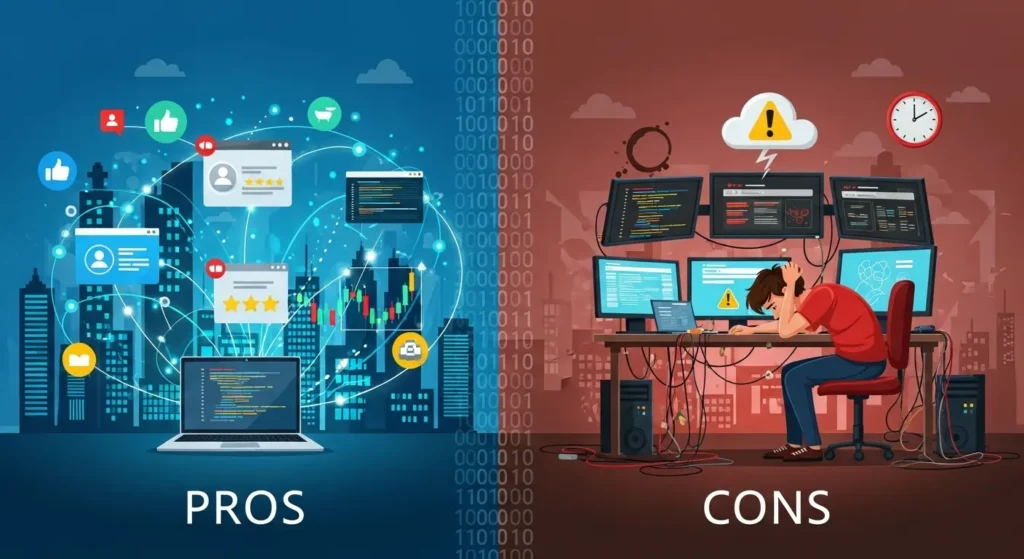
Pros of Custom Web Development:
- Full control over design and functionality.
- Scalability for complex, enterprise-level solutions.
- No reliance on plugins, leading to better security and faster loading times.
Cons of Custom Web Development:
- Higher upfront cost and longer development time.
- Requires technical expertise for maintenance.
Pros & Cons of WordPress Development
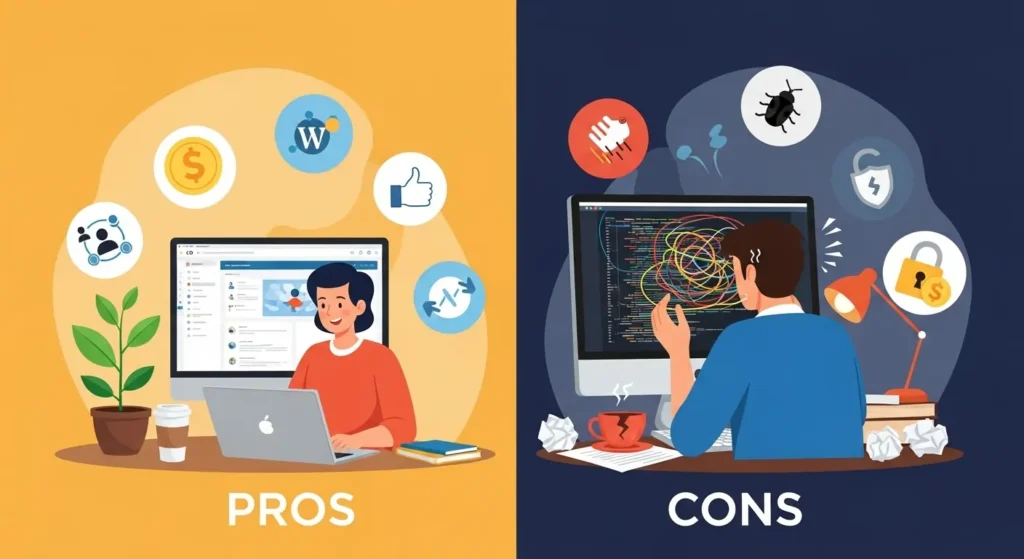
Pros of WordPress Development:
- Quick setup and cost-effective, especially for small businesses.
- Huge selection of themes and plugins for almost any website need.
- Great for SEO out-of-the-box with the right plugins (e.g., Yoast SEO).
Cons of WordPress Development:
- Limited flexibility for complex, custom features.
- Plugin dependency can lead to security vulnerabilities and slow website performance.
Web Development vs WordPress: SEO Comparison
Search Engine Optimization (SEO) is one of the most important factors when choosing a development platform. Here’s how SEO stacks up between custom web development and WordPress:
SEO in Web Development:
- Complete control over technical SEO: Custom-built sites allow developers to implement SEO optimizations exactly how they want, including controlling loading times, schema markup, and mobile responsiveness.
- Better performance: A well-coded custom website can be optimized for faster load times, which Google ranks highly.
SEO in WordPress:
- Built-in SEO features: WordPress has many built-in features for SEO, especially when paired with plugins like Yoast SEO or RankMath.
- Easy content management: WordPress is user-friendly, enabling business owners to optimize content (titles, meta descriptions, keywords) quickly.
Which is better for SEO?
- Custom web development is ideal for businesses needing highly specific features and performance-driven SEO.
- WordPress is better for beginners or small businesses with easy-to-implement SEO plugins and less complexity.
Web Development vs WordPress: Performance & Speed
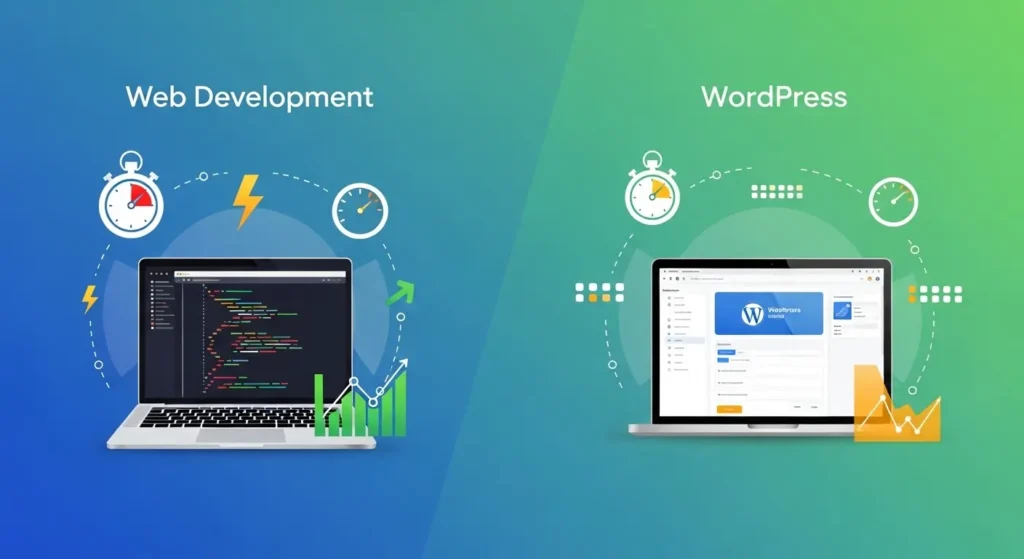
When it comes to performance, custom-built websites tend to outperform WordPress sites due to the ability to control every aspect of the code. WordPress websites, especially those loaded with plugins, can suffer from slower speeds due to excessive code bloat and plugin conflicts.
Why Custom Web Development Outperforms WordPress in Performance:
- Code Optimization: With custom-built websites, developers can write clean, optimized code tailored specifically to the website’s needs. This means there is no unnecessary code, reducing the file size and ensuring faster load times.
- Minimalist Design: Custom development allows for a more minimalist design, avoiding the excess of unnecessary features or bloated components, which are common with pre-built themes and plugins in WordPress.
- Tailored Caching: Custom websites can implement advanced caching techniques, such as server-side caching and optimized database queries, further reducing load times.
- Scalability: Custom websites can be optimized to handle high traffic by using dedicated server solutions and custom CDN (Content Delivery Network) configurations, ensuring consistent performance even with spikes in traffic.
Why WordPress Can Struggle with Performance:
- Excessive Plugins: One of the most significant issues WordPress websites face is plugin bloat. Many WordPress websites rely on a vast array of plugins to add features like contact forms, SEO optimization, and social media integrations. Each plugin adds extra CSS, JavaScript, and database queries, which can significantly slow down the website. Sometimes, these plugins can conflict with each other, causing additional performance issues.
- Heavy Themes: Some WordPress themes come pre-loaded with unnecessary features, such as animations, scripts, and complex styling, which can negatively impact load times. These features are often not needed for the website to function properly but can slow down the site significantly.
- Database Overload: WordPress websites rely heavily on databases to store content. As the website grows, the database can become bloated, especially if there’s a lot of content, comments, or post revisions, resulting in slower database queries.
Cost & Time to Market
Cost for Custom Web Development:
- Development costs: Custom web development can be significantly more expensive due to the need for skilled developers and longer timelines.
- Time to market: Depending on the complexity, custom websites may take several weeks to months to develop.
Cost for WordPress Development:
- Development costs: WordPress development is cheaper because many themes and plugins are free or low-cost.
- Time to market: WordPress websites can be launched quickly, sometimes within a few days to weeks, especially for simple sites.
Best Use Cases: Web Development vs WordPress
Here’s a summary of when to choose web development or WordPress development based on your needs:
| Use Case | Web Development | WordPress Development |
| Business Website (Custom Features) | ✅ | ❌ |
| Blog/Content-Focused Site | ❌ | ✅ |
| E-commerce | ✅ (Custom e-commerce solutions) | ✅ (WooCommerce) |
| Large Scale Projects | ✅ | ❌ |
Conclusion
Ultimately, the best option depends on your specific needs. If you need a highly tailored, scalable website with total control over every feature, custom web development is the way to go. However, if you’re looking for an affordable, easy-to-manage website, especially for a blog or business site, WordPress development is an excellent choice.
Frequently ask question
1. Is WordPress suitable for large businesses?
Yes, with plugins like WooCommerce and premium themes, WordPress can be used for large business websites. However, for highly complex requirements, custom web development may be better suited.
2. Can custom web development be SEO-friendly?
Yes, a custom-built website can be optimized for speed, performance, and technical SEO, offering more control than WordPress.
3. What are the main differences between Web Development and WordPress Development?
Web Development involves custom coding and offers complete control over design and functionality, while WordPress Development uses pre-built themes and plugins for faster, cost-effective website creation.
4. Is WordPress good for SEO?
Yes, WordPress is SEO-friendly with plugins like Yoast SEO and RankMath. However, for advanced SEO needs, custom web development offers better control.
5. Can I scale my WordPress website as my business grows?
Yes, but custom web development is often more efficient for large-scale growth, as WordPress can face performance issues with higher traffic and complex features.
6. Is it expensive to maintain a WordPress site?
WordPress maintenance is generally low-cost, but plugin conflicts and security updates can increase costs over time.
7. What is the best CMS for SEO?
WordPress is excellent for SEO with built-in tools and plugins, but custom web development provides greater flexibility for technical SEO.